Some years back, my son — then a young boy — asked me a cheeky question.
“I am your only child… so I can’t ask you who your favorite is. But you have worked with many team members over the years. Do you have a favorite?”
I smiled and said, “Yes… I do have a few.” He looked surprised. “Really? Why?”
I thought for a bit and responded, “They were dependable. They responded even when they were on vacation. They often carried their laptops just in case there was urgent work.”
Even as I said this, I realized the irony.
I truly believe that employees must switch off, take meaningful breaks, and return refreshed — not just physically, but emotionally.
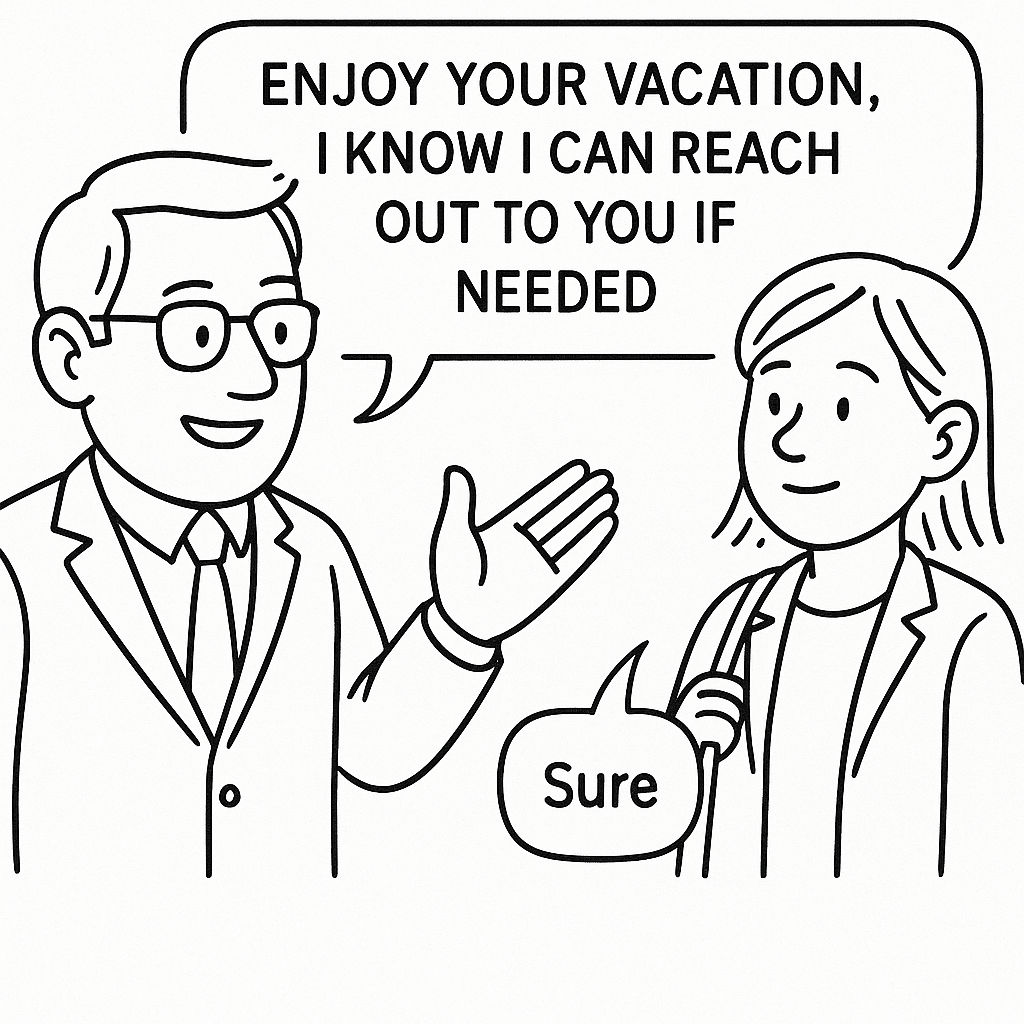
Yet, as a manager, I find myself feeling comforted when I know a few people in the team will be available, just in case.
It’s not about disturbing them, I rarely do. But, the quiet assurance means a lot.
It’s a paradox I carry within me.
I was relieved to see that this internal conflict isn’t unique to me. A recent study by professors from the USC Marshall School of Business, published in Harvard Business Review, delves into this issue, termed as “detachment paradox.”
The study reveals that while managers promote work-life balance and encourage employees to unplug, they often subconsciously penalize those who do. Employees who fully disconnect are perceived as less committed and are rated lower in promotability.
The first step towards resolving this paradox is to acknowledge it! Only then can we ensure it doesn’t impact our actions.
Have you struggled with this paradox as a manager? Would love to hear how you deal with it.
At the outset, I would like to thank you for stopping by my Blog.
I believe that there is nothing right or wrong in this world. What’s right in this moment and context may be wrong in another moment and context. This belief has inspired me to name my blog ‘Perspectives’.
Perspectives is a platform for me to share my experiences, thoughts and perspectives on various subjects. You may have a different point of view. I look forward to hearing them, these are the triggers for rich and deep conversations.
On personal front, I live in Mumbai, India. I love to read; Somerset Maugham and Nevil Shute are my favorite authors. My favorite books are The Razor’s Edge, Mrs. Craddock, Chequer Board and Gone with the Wind. I am thankful to my father who inculcated the habit of reading in me early on.
I am also passionate about traveling, I have been to most parts of India and to several countries across the globe.
On professional front, I work in Human Resources function. Over two and half decades, I have worked across multiple industries and cultures. I focus on Leadership Development, Talent Management, Visioning and Culture, Large-scale change, Employee Listening & Engagement, Employee Well-being, Inclusive work culture, HR effectiveness, Behavior and Mind-set shifts through sustained interventions
I currently lead Organization Effectiveness Function for Aditya Birla Group, a $44.3 billion conglomerate with 120000 employees across 35 countries.
I sincerely hope that you will enjoy reading my blog. I look forward to your thoughts and suggestions.
Thank you!
View all posts by Padma Rajeswari

 Perspectives