
Let’s look at the experience of two friends – Sam and Sonia – management graduates working in the same organization, but in different functions.
Being the first performance appraisal, both are anxious. They exchange notes, boost each other’s morale and decide to catch up later.
Here’s a glimpse of Sam’s conversation with his manager.
They first discuss each goal in detail for 35 mins: what went well, what could not be completed and reason for misses. The manager encourages Sam to reflect on what he could have done differently, what he would like to work on. Post this, the manager spends 10 mins discussing Sam’s strengths, weaknesses, capabilities he must develop to grow in his career. The conversation is wrapped up with the manager congratulating Sam on good work done.
Here’s how Sonia’s conversation goes:
Sonia’s manager has worked closely with her throughout the year. He has given her regular feedback on deliverables. Thus, during the performance conversation, they spend first 15 mins discussing the goals – achievements, hits, and misses. Post this, her manager spends 30 mins discussing her aspirations, what she wants to do, wants to learn, what kind of projects / assignments she could pick…. her holistic development – both professionally and personally. The manager wraps up the conversation enquiring support that she would require from him.
That evening, Sam and Sonia catch up over a cup of coffee and discuss their first performance appraisal experience.
Who is likely to feel more energized, optimistic about their future in the organization?
Sonia or Sam?
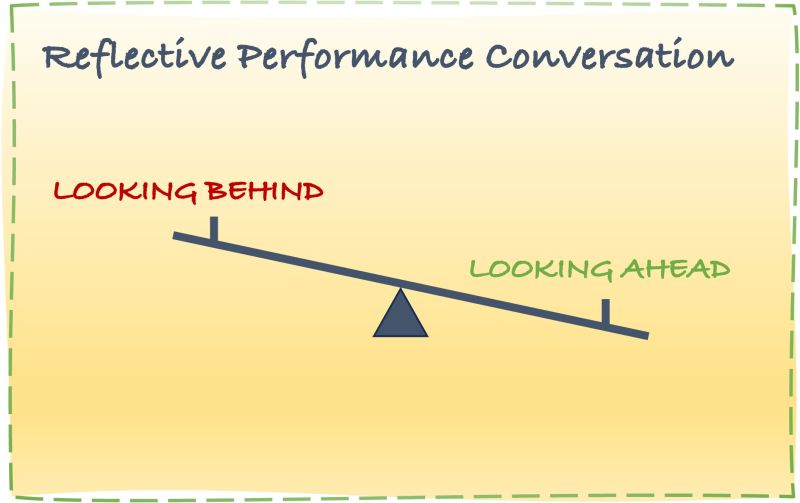
Performance conversation usually revolves around two large segments:
Looking behind:
– Achievement of goals – the hits and the misses
– Feedback on strengths, opportunities for improvement
Looking ahead:
– The softer aspects of the organization like living Organization Values
– Development goals, what the employee wishes to achieve
– Career aspirations and dreams
The time that a manager spends on each segment makes a big difference. Sam’s manager followed a 70:30 ratio – spending more time ‘looking behind’. Whereas Sonia’s manager followed a 30:70 ratio – spending significant amount of time ‘looking ahead’. Continuous feedback throughout the year also made a big difference to their conversation. It allowed for the space to look ahead.
Same organization, same performance management process and appraisal templates – yet two managers created completely different experience for their employees.
Several organizations, at least in India, will shortly be initiating performance appraisals that would culminate with sharing of performance ratings and compensation revision / promotion letters.
Performance conversation gives an opportunity to create a positive employee experience. All we need to do is turn it on its head. Make it reflective – more about ‘looking ahead’ than ‘looking behind’.
 Perspectives