
I remember this project from years ago. One task on the critical path was delayed. I got anxious and kept following up with the team member responsible.
My phone buzzed, a WhatsApp message from this team member popped. It said,
“I am so bugged with Padma. She is just driving me nuts with her follow-ups. I just want to scream at her—just shut up and let me focus on the work.”
She probably intended to send it to someone else and sent it to me by mistake.
For a moment, I froze. My first instinct was to react. Instead I stood up, walked away from my desk and stayed quiet.
A couple of hours later she came into my office and asked for five minutes. What followed was a short, powerful recovery conversation. Here’s what she did:
- She owned the mistake. She didn’t sugarcoat it — she admitted she should have kept me posted about the delay.
- She apologized with honesty. She admitted she should have kept me informed.
- She shared her perspective. Not to justify but see her point of view. How my constant follow-ups felt to her – as if I doubted her capability or undermining her accountability
- She proposed solution. She shared concrete actions she is taking to accelerate the work and what she would do differently in future.
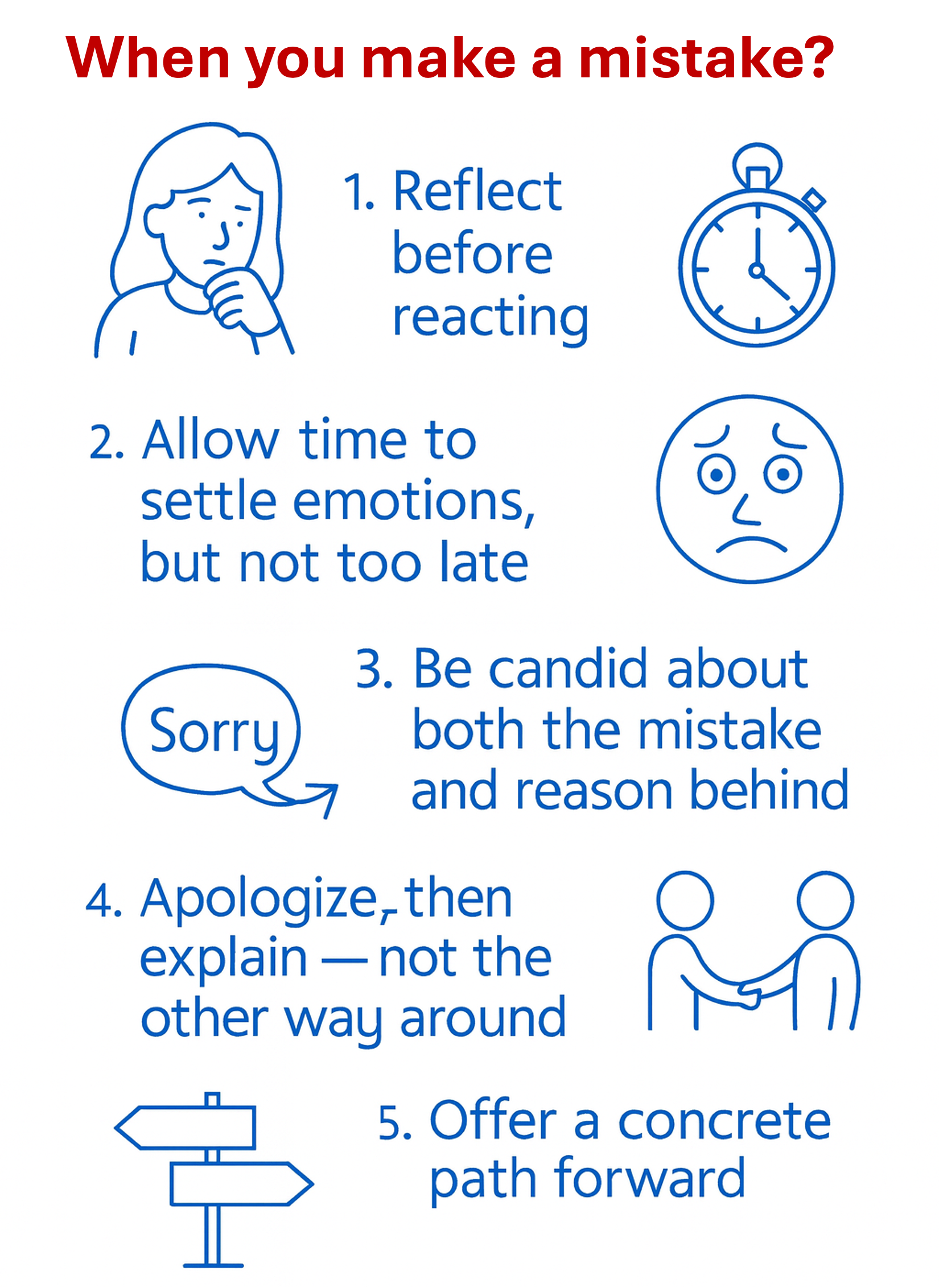
That short, mature exchange didn’t break our relationship. Here’s what she got right:
- Reflecting before reacting.
- Letting emotions settle, but not delaying the conversation.
- Being honest about both the mistake and the feeling behind it.
- Apologizing, then explaining — not the other way around.
- Offering a concrete path forward and inviting collaboration.
Trust is tested in small, awkward moments and rebuilt by honest, reflective action.
Have you ever accidentally broken someone’s trust at work (or been on the receiving end)? How did you rebuild it — what concrete steps actually worked for you?
Share your story in the comments.
 Perspectives